
There is never a convenient time for tragedy.
The diagnosis does not wait until the strategic plan is complete. The funeral does not consult your ideal week. The family crisis does not arrive after the busy season.
Life happens when life happens. And leadership happens at the same time.
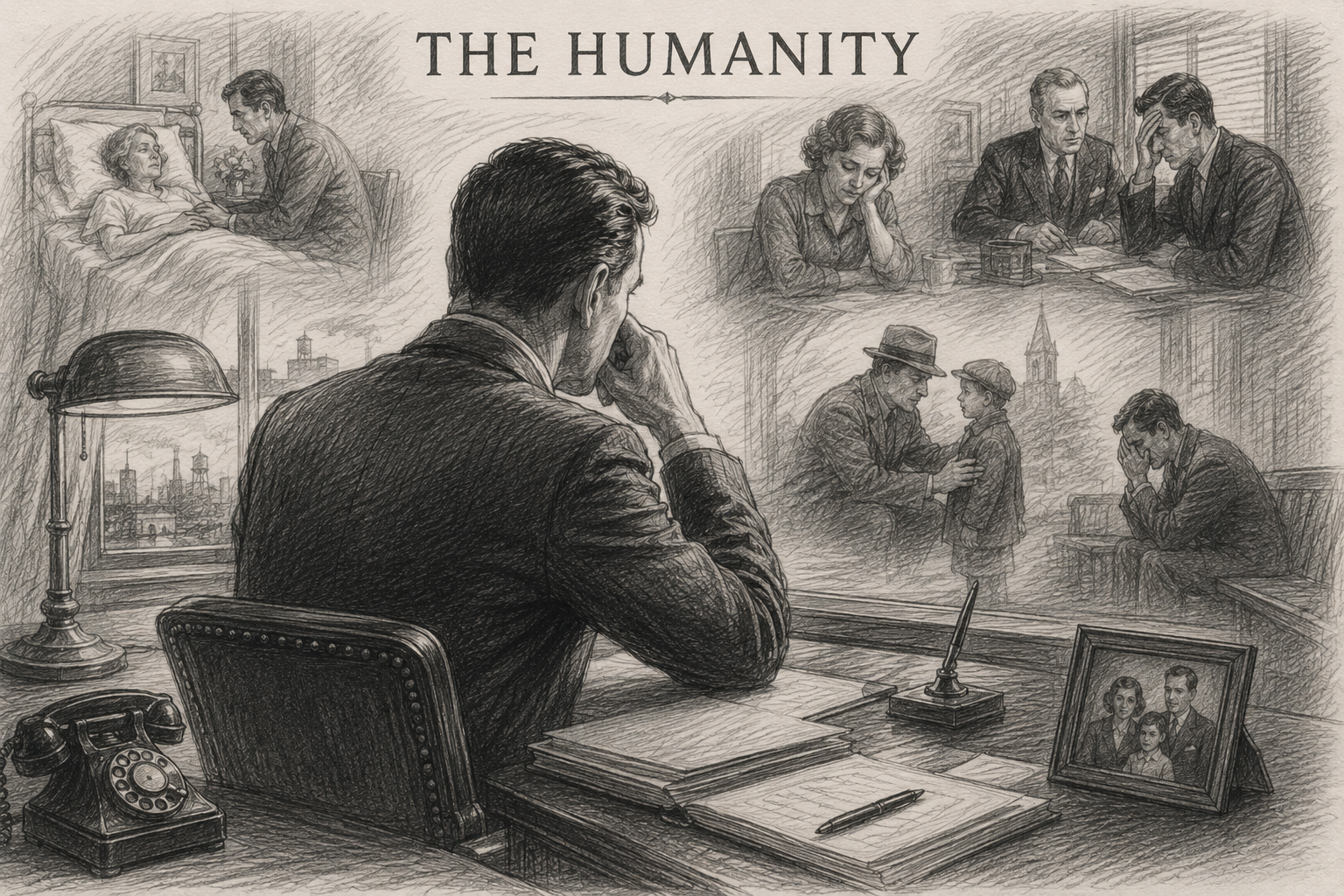
One of the great myths of leadership is that leaders somehow stand outside the human condition, as though titles exempt us from grief, responsibility shields us from fear, and experience protects us from loss.
It doesn’t.
I seem to have been surrounded by significant reminders of life's fragility lately – a major injury in my immediate family, a couple of funerals lined up, a close friend suffering tragic loss, and another with an ambulance ride to the ER.
All burdens not one of us would have chosen. But the older I get, the more I realize these are not interruptions to life.
They are life.
And these real-life moments are not reserved for people outside the executive suite. Senior leaders experience the same fears, losses, disappointments, and uncertainties as everyone else.
The difference is that leadership rarely affords the luxury of carrying those burdens in isolation. Those meetings are still on the calendar. Your employees still need direction. The customers still need served. Decisions still need to be made. And payroll still needs funded.
And even bigger than all that, the mission still matters.
That tension is one of the least discussed realities of leadership. Not because leaders carry heavier personal burdens than everyone else, but because the very nature of their leadership expands the circle of concerns they carry.
Healthy servant leaders carry their own burdens while simultaneously helping others navigate theirs.
As I reflect on the leaders I spend time with, I am increasingly convinced that organizations are not collections of positions, departments, and job descriptions. They are collections of human stories.
Every seat in every organization is occupied by a human being carrying something.
Some stories are visible. Most are not. One employee is caring for an aging parent. Another is navigating a difficult marriage. Someone else is grieving a loss. Another is carrying anxiety about a child's future. Still another is quietly battling a health issue nobody knows about.
And while all of that is happening, the work continues.
This is where leadership becomes deeply human. Because the leader is not simply responsible for accomplishing the mission. The leader is responsible for accomplishing the mission while recognizing the humanity of the people pursuing it. Including their own.
I think many leaders struggle here. We readily extend grace to others. We encourage employees to take care of their families. We tell people to prioritize their health. We encourage them to grieve when grief arrives.
Yet many of us hold ourselves to an entirely different standard. We quietly believe we should be able to compartmentalize. To separate our personal lives from our professional lives.
We separate our personal challenges from our work, our fears from our responsibilities, our humanity from our leadership. But life rarely cooperates with those compartments.
The business owner does not stop being a spouse when they walk into the office. The executive does not stop being a parent during a board meeting. The pastor does not stop being human when stepping behind the pulpit.
The leader does not stop carrying personal burdens simply because others are depending on them.
We are integrated beings. Business. Life. Faith. Heart. Soul. Mind. And body. Everything comes with us everywhere we go.
The blessing and burden of being human is that there are no neatly separated categories. There is only life.
Sometimes life is beautiful. Sometimes it is painful. Often it is both at the same time.
Perhaps that’s why I have less certainty these days about leadership being primarily a matter of control.
We spend much of our careers solving problems, reducing risk, creating plans, and bringing order to complexity. Those are important responsibilities.
But eventually every leader encounters circumstances that cannot be fixed, questions that cannot be answered, outcomes that cannot be controlled, and situations that must simply be endured.
That realization can feel unsettling. Especially for high-capacity leaders who are accustomed to finding solutions.
Yet there is also something deeply human about it. It reminds us that leadership gives us influence, but not sovereignty.
And perhaps that is where faith quietly enters the conversation. Not as an escape from reality, but as an anchor within it.
A reminder that while we are called to lead faithfully, we were never intended to carry the weight of the world. Only the portion entrusted to us.
So if you find yourself carrying burdens that feel heavy right now, you are not alone.
If you are trying to care for your people while navigating challenges in your own life, you are not alone.
If you sometimes feel the tension between responsibility and humanity, you are not alone.
That tension is not evidence that you are failing at leadership. It may simply be evidence that you are experiencing the humanity of leadership.
We do our best.
We care for those entrusted to us.
We pursue meaningful work.
We love our families.
We serve our communities.
We lean into our faith.
We grieve when grief comes.
We celebrate when joy arrives.
And somehow, in the middle of it all, we keep moving forward together.
Not because we have mastered the tension. But because we share it.
Blessings to you, my friends!
==========
This Week’s Resource Recommendation:
"The Starfish and the Spider: The Unstoppable Power of Leaderless Organizations"
- Ori Brafman & Rod A. Beckstrom
From Amazon: If you cut off a spider's head, it dies; if you cut off a starfish's leg it grows a new one, and that leg can grow into an entirely new starfish. Traditional top-down organizations are like spiders, but now starfish organizations are changing the face of business and the world.
What's the hidden power behind the success of Wikipedia, craigslist, and Skype? What do eBay and General Electric have in common with the abolitionist and women's rights movements? What fundamental choice put General Motors and Toyota on vastly different paths?
Ori Brafman and Rod Beckstrom have discovered some unexpected answers, gripping stories, and a tapestry of unlikely connections. The Starfish and the Spider explores what happens when starfish take on spiders and reveals how established companies and institutions, from IBM to Intuit to the U.S. government, are also learning how to incorporate starfish principles to achieve success.
MMS 26-24
I would love to send our Monday Morning Stretch directly to you via email and would consider it an honor to serve you in this way. To register, please take 30 seconds to give us permission to do so below.
