
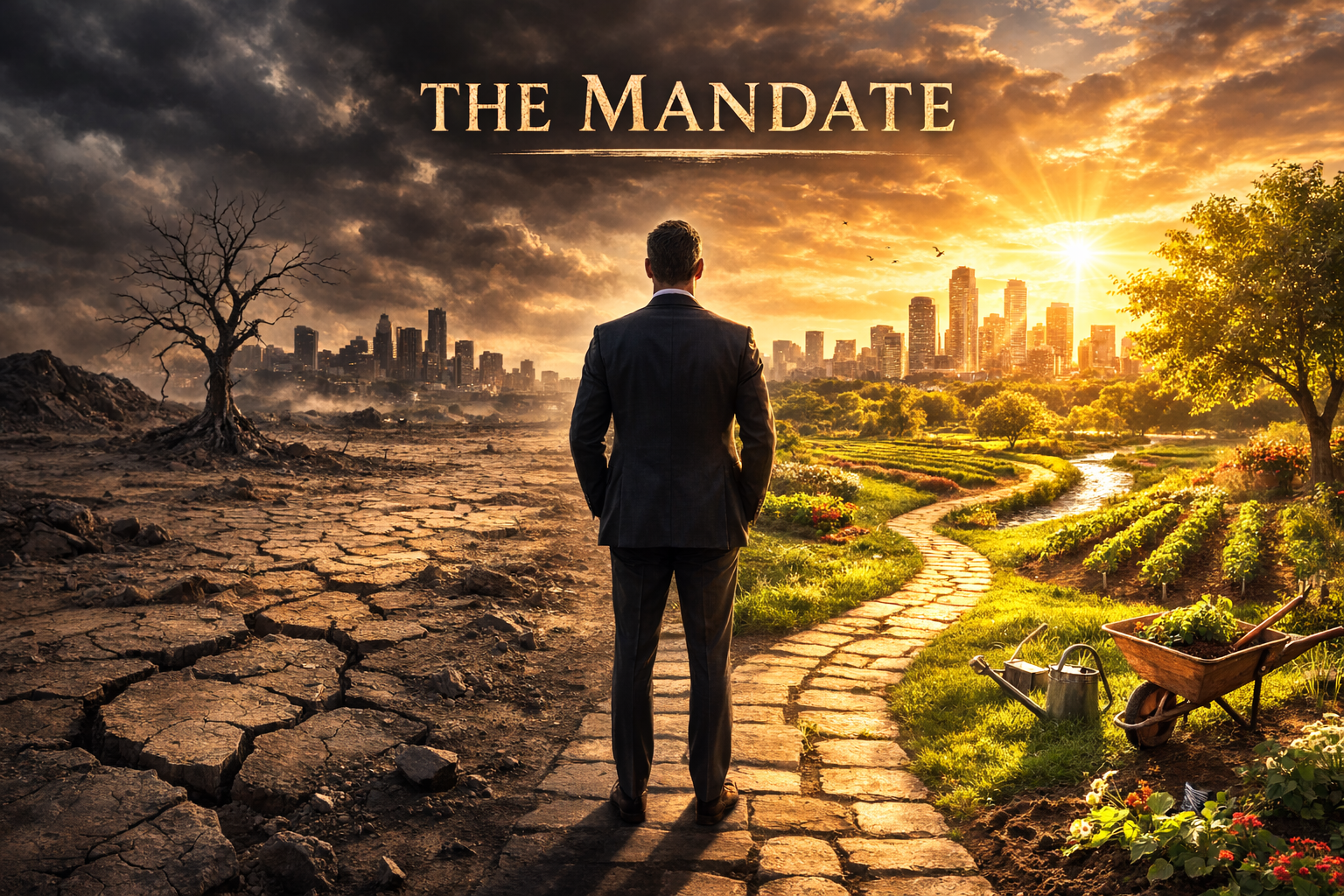
The Mandate
Many executives work tirelessly to protect what exists, when they were designed to cultivate that which is not yet.
Muscles are the primary energy source for the movement of our bodies.
Yes, they work in tandem with other systems that are also quite necessary. But without a healthy and developed muscular system, outside forces (e.g. gravity) take over.
This is why regular training is so important. It is why “Every Day Is Training Day” remains the primary mantra of The H3 Leader.
Because “muscles,” the drivers of positive, intentional movement, exist across the spectrum of our lives. They are not only physical. They are present in our mental, emotional, and spiritual realms.
Healthy, purpose-driven leaders work to develop and engage these drivers across that entire spectrum.
Today I want to focus on one of the lesser discussed leadership muscles: Creativity.
When you think about it, creativity is the proverbial key that unlocks the door to almost every meaningful problem your organization will face.
Strategy requires it. Conflict resolution depends on it. Innovation demands it. Even cost control and operational efficiency often hinge on someone seeing a path that others did not.
And ideally, creativity is not centralized at the top.
The further down the chart you can push creative problem solving, the healthier your organization will be. It signals trust. It communicates ownership. It transforms employees from task-doers into stewards of the mission. Engagement rises when people believe they are invited to think, not merely comply.
But there is a bridge that must be crossed before that can happen.
A healthy organization must ensure that everyone making key decisions is rowing in the same direction. Shared creativity without shared direction creates chaos. Empowered problem solving without alignment produces fragmentation.
A little over a decade ago, Wiley published The Work of Leaders: How Vision, Alignment, and Execution Will Change the Way You Lead (Straw, Davis, Scullard, Kukkonen). The authors distilled the ultimate work of executive leadership into three priorities: Vision, Alignment, and Execution.
It starts with Vision – the picture of your preferred future. Is it clear? Is it documented? Is it consistently communicated throughout your organization?
Then comes Alignment. It is healthy for departments, and even individual contributors, to establish their own vision for their work. But those visions must be subservient to the organization’s overarching Vision. When every team’s priorities reinforce the same future picture, creativity becomes constructive rather than competitive.
And lastly, Execution. Without disciplined systems, processes, metrics, accountability, and motivation, vision and alignment remain aspirational. Execution turns imagination into impact.
All three are The Work of Leaders.
But all three will also face resistance. Market shifts. Cultural headwinds. Internal fatigue. Unexpected crises. Even subtle sabotage.
And it is here where we must zoom out beyond business theory and return to an ancient, foundational cornerstone.
In Genesis 1:28, after creating mankind in his image, God blessed them and said,
“Be fruitful and increase in number; fill the earth and subdue it. Rule over the fish in the sea and the birds in the sky and over every living creature that moves on the ground.”
This is often referred to as the Creation Mandate.
Humanity was not placed in the garden merely to maintain it. Even before the fall, Adam was instructed “to work it and take care of it” (Genesis 2:15, NIV). There was cultivation involved. Development. Expansion. Order brought from potential.
In other words: We were designed to create.
Not to create “ex nihilo” (out of nothing) as God did, but to cultivate, shape, organize, and steward what he has entrusted to us.
For the executive leader, this mandate does not disappear when you step into a boardroom.
Your organization is a garden of sorts. Raw potential exists in your people, your products, your systems, your culture. Markets shift. Technologies evolve. Customer expectations change. Left unattended, entropy wins. Gravity takes over.
Your responsibility is not merely to protect what currently exists. It is to cultivate that which is not yet (the future).
Creativity, then, is not a luxury skill for marketing teams or product developers. It is a theological and leadership responsibility. It is part of what it means to bear the image of a Creator.
John Maxwell often says that everything rises and falls on leadership. I would add that healthy leadership rises and falls on disciplined imagination.
The courage to envision a preferred future.
The wisdom to align people around it.
The grit to execute against it.
And the creativity to navigate the inevitable obstacles along the way.
If you want creativity at every level of your organization, you must model it at the top.
You must demonstrate thoughtful problem solving under pressure. You must ask better questions rather than simply give answers. You must reward responsible risk-taking when it is aligned with vision. You must clarify guardrails so that freedom does not become fragmentation.
When vision is clear, alignment is strong, and execution is disciplined, creativity becomes fuel rather than fire.
And when you embrace the deeper mandate behind your leadership, you stop seeing creativity as optional flair and begin seeing it as faithful stewardship.
You were not designed merely to preserve.
You were designed to cultivate.
So train your creative muscles. Exercise them daily. Because gravity is real. Entropy is relentless. And the mandate to create still stands.
Remember: Every Day Is Training Day!
Blessings to you, my friends!
==========
This Week’s Resource Recommendation:
"The Work of Leaders: How Vision, Alignment, and Execution Will Change the Way You Lead"
- Julie Straw, Barry Davis, Mark Scullard, Susie Kukkonen
From Amazon: The culmination of six years of research and development, The Work of Leaders presents a simple structure that neatly captures the complexity of contemporary leadership. The goal of this book is to make this wealth of leadership insight accessible to anyone who wants better results as a leader.
The work that leaders do―the work that really matters―is boiled down to three areas: crafting a vision, building alignment, and championing execution. Vision, Alignment, and Execution are “magic words.” They strike a chord that turns the goal of leadership into tangible steps.
With passion and insight, the authors draw from the best-known leadership authorities, while leveraging their unparalleled access to data from thousands of leaders and followers and their connections to hundreds of organizational development consultants. Interwoven with humor and drawing from real-world scenarios, The Work of Leaders distills leadership best practices into a simple, compelling process that helps leaders at all levels get immediate results.
MMS 26-09
I would love to send our Monday Morning Stretch directly to you via email and would consider it an honor to serve you in this way. To register, please take 30 seconds to give us permission to do so below.
