
The Mailbox
It’s a whole lot more fun to go to the mailbox.
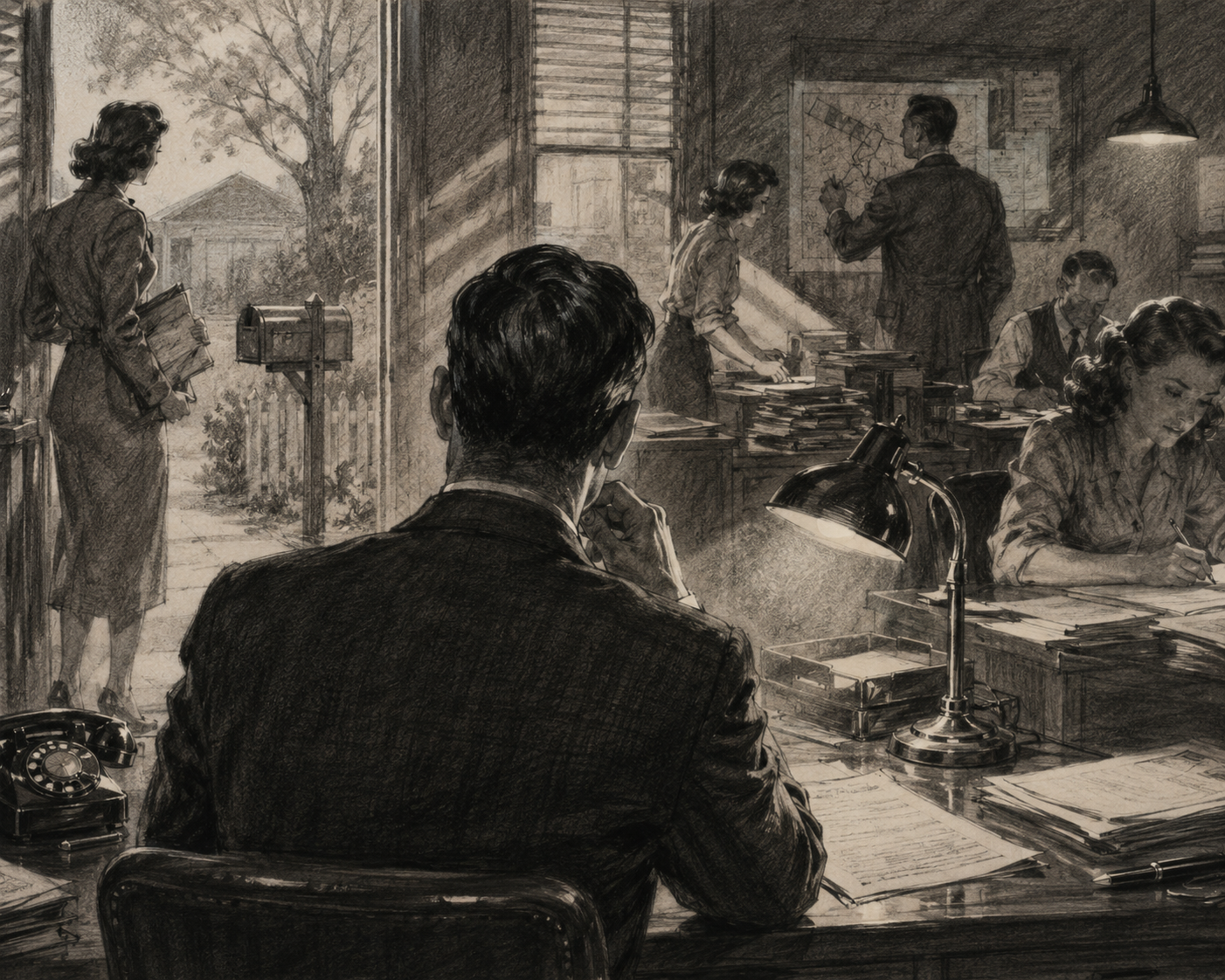
Nobody has to remind me to go to the mailbox. The hedges, though? And the weeds? Even the trees need a good trimming…
If I make the mistake of looking closely, several other things around my property desperately need attention.
A short walk to the mailbox recently got me thinking again about a reality executive leaders wrestle with on a daily basis.
Like many, I actually enjoy mowing the lawn. There’s something extremely satisfying about it. You can see your progress. The lines look good. In a relatively short amount of time, the whole property looks better.
But trimming hedges? Cutting back trees? Pulling weeds from the landscaping? Not so much.
Those things are true maintenance. They’re not particularly exciting, but they are necessary if I want to take good care of something I value.
But going to the mailbox is a different story. It’s in a completely different mental space. It involves hope, anticipation, and possibility.
Maybe something came. Maybe it’s interesting. Maybe it’s something I’ve been waiting for.
The weeds offer no such promise. They’re just weeds. They’re a nuisance. They serve no positive purpose. And they tend to come back to haunt me over and over again.
Most founders, entrepreneurs, and growth-minded executives understand this tension.
We like what’s “next.”
The next customer. The next product. The next market. The next hire. The next location. The next strategy. The next opportunity.
There is energy in creating something that didn’t exist before. There is satisfaction in solving a new problem, pursuing a new possibility, or watching an idea become reality.
That instinct isn’t bad. In fact, it is a key reason the organization exists in the first place.
Builders build.
But eventually, everything we build becomes something we have to maintain, which is considerably less exciting.
“If you are not growing, you are dying.” It’s an old stand-by in business with enough truth for us to pay attention to it.
There is also enough there to get us into trouble if we buy the lie that “growth” equals “new.”
If we’re not launching, expanding, acquiring, creating, hiring, or chasing something new, we can begin to wonder whether we’re really moving forward.
Maintenance can feel like standing still.
But it’s not.
Today’s Stretch is here to remind us that maintenance is leadership, too.
Every organization has hedges that need trimming and weeds that need pulling.
Culture needs tending.
People need developing.
Relationships need maintaining.
Customers need caring for.
Systems need reviewing.
Processes need simplifying.
Financial disciplines need reinforcing.
Technology needs updating.
Knowledge needs documenting.
Facilities need maintaining.
Values need revisiting and reinforcing.
And things that worked wonderfully when the organization was smaller need to be reconsidered as the organization grows.
None of this means the CEO should personally perform every maintenance task. That would be a failure to delegate, not leadership.
But there is an important difference between delegating maintenance and abdicating responsibility and priority.
You can delegate the work of maintenance, but you can’t delegate your responsibility for the health of what has been entrusted to you.
Yes, we’re back to the stewardship thing again.
And I think that’s where those of us who love to build may need to Stretch our thinking.
Our responsibility isn’t just to create something valuable. It’s also to tend what we have created.
Beyond surface-level stewardship, there is another important reason maintenance deserves our attention.
Neglect almost always compounds.
Ignore the landscaping for a week and you have a few weeds. Ignore it long enough and you have a major project.
Organizations work much the same way.
A slightly unhealthy cultural behavior that’s ignored eventually becomes accepted behavior. A cumbersome process nobody fixes gets workarounds – and then the workarounds get workarounds.
A system that was adequate five years ago becomes increasingly fragile as the organization grows around it. A difficult conversation postponed long enough becomes a much more difficult conversation.
Neglected maintenance becomes repair. Neglected repair eventually becomes rebuilding. And rebuilding something we once had because we failed to maintain it is a particularly expensive form of growth.
(It’s also really annoying, but that’s another conversation…)
Methinks our definition of “growth” may need some tending…
Growth doesn’t have to be the result of addition. Healthy organizations need to do both well – to build and to maintain, to pursue and to tend, to create and to steward.
There will always be another mailbox to walk toward. Another possibility. Another opportunity. Another interesting thing just over the horizon.
Go after them when it makes good sense. But every once in a while, before you head down the driveway, take a good look around at what you have already built.
What needs tending? What have you been assuming will remain healthy without your attention? What organizational maintenance have you labeled “somebody else’s job” that still requires your leadership? What might become significantly more expensive if you continue walking past it?
The mailbox can wait a few minutes. There might be some weeds to pull first.
Blessings to you, my friends!
==========
This Week’s Resource Recommendation:
"The Innovation Delusion: How Our Obsession with the New Has Disrupted the Work That Matters Most"
- Lee Vinsel & Andrew L. Russell
From Amazon: It’s hard to avoid innovation these days. Nearly every product gets marketed as being disruptive, whether it’s genuinely a new invention or just a new toothbrush. But in this manifesto on the state of American work, historians of technology Lee Vinsel and Andrew L. Russell argue that our way of thinking about and pursuing innovation has made us poorer, less safe, and—ironically—less innovative.
Drawing on years of original research and reporting, The Innovation Delusion shows how the ideology of change for its own sake has proved a disaster. Corporations have spent millions hiring chief innovation officers while their core businesses tank. Computer science programs have drilled their students on programming and design, even though the overwhelming majority of jobs are in IT and maintenance. In countless cities, suburban sprawl has left local governments with loads of deferred repairs that they can’t afford to fix. And sometimes innovation even kills—like in 2018 when a Miami bridge hailed for its innovative design collapsed onto a highway and killed six people.
In this provocative, deeply researched book, Vinsel and Russell tell the story of how we devalued the work that underpins modern life—and, in doing so, wrecked our economy and public infrastructure while lining the pockets of consultants who combine the ego of Silicon Valley with the worst of Wall Street’s greed. The authors offer a compelling plan for how we can shift our focus away from the pursuit of growth at all costs, and back toward neglected activities like maintenance, care, and upkeep.
For anyone concerned by the crumbling state of our roads and bridges or the direction our economy is headed, The Innovation Delusion is a deeply necessary reevaluation of a trend we can still disrupt.
MMS 26-35
I would love to send our Monday Morning Stretch directly to you via email and would consider it an honor to serve you in this way. To register, please take 30 seconds to give us permission to do so below.
